The Sonoran Desert is one of the most biologically rich deserts in the world. But today, the desert is changing faster than many plants can adapt.
At the Garden, scientists are working to answer some of the biggest questions facing the Southwest: How will desert plants survive rising temperatures? Which species are most vulnerable? And what can we do now to help protect these iconic landscapes for future generations?
Saving the Icon of the Sonoran Desert
Few plants symbolize Arizona more than the saguaro. Researchers are seeing troubling signs with these icons: extreme heat, prolonged drought, urban development, invasive species, wildfire and the loss of “nurse plants” that shelter young saguaros are making it increasingly difficult for survival.
Garden scientists know these stressors are affecting saguaro but also still learning about their effects.
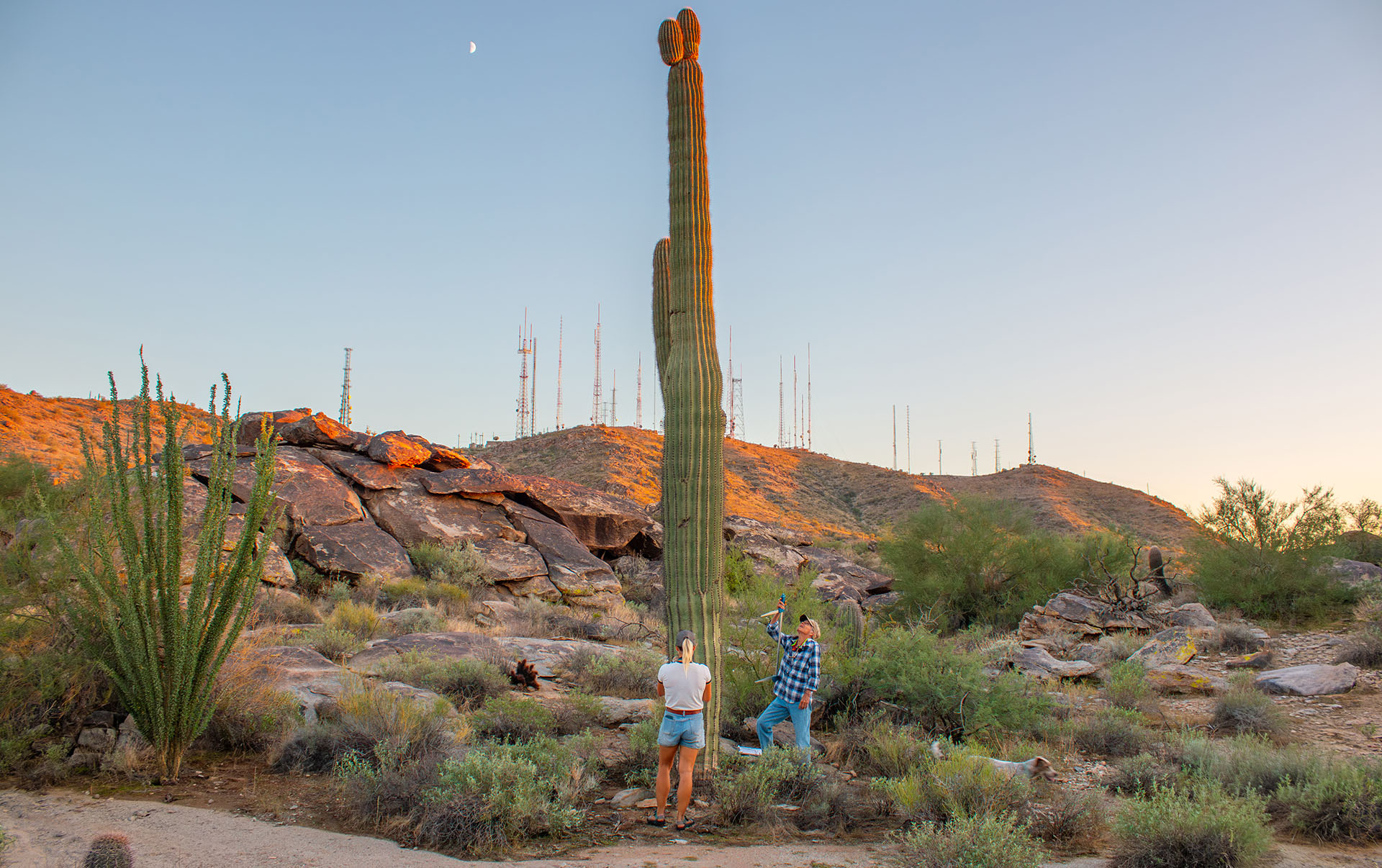
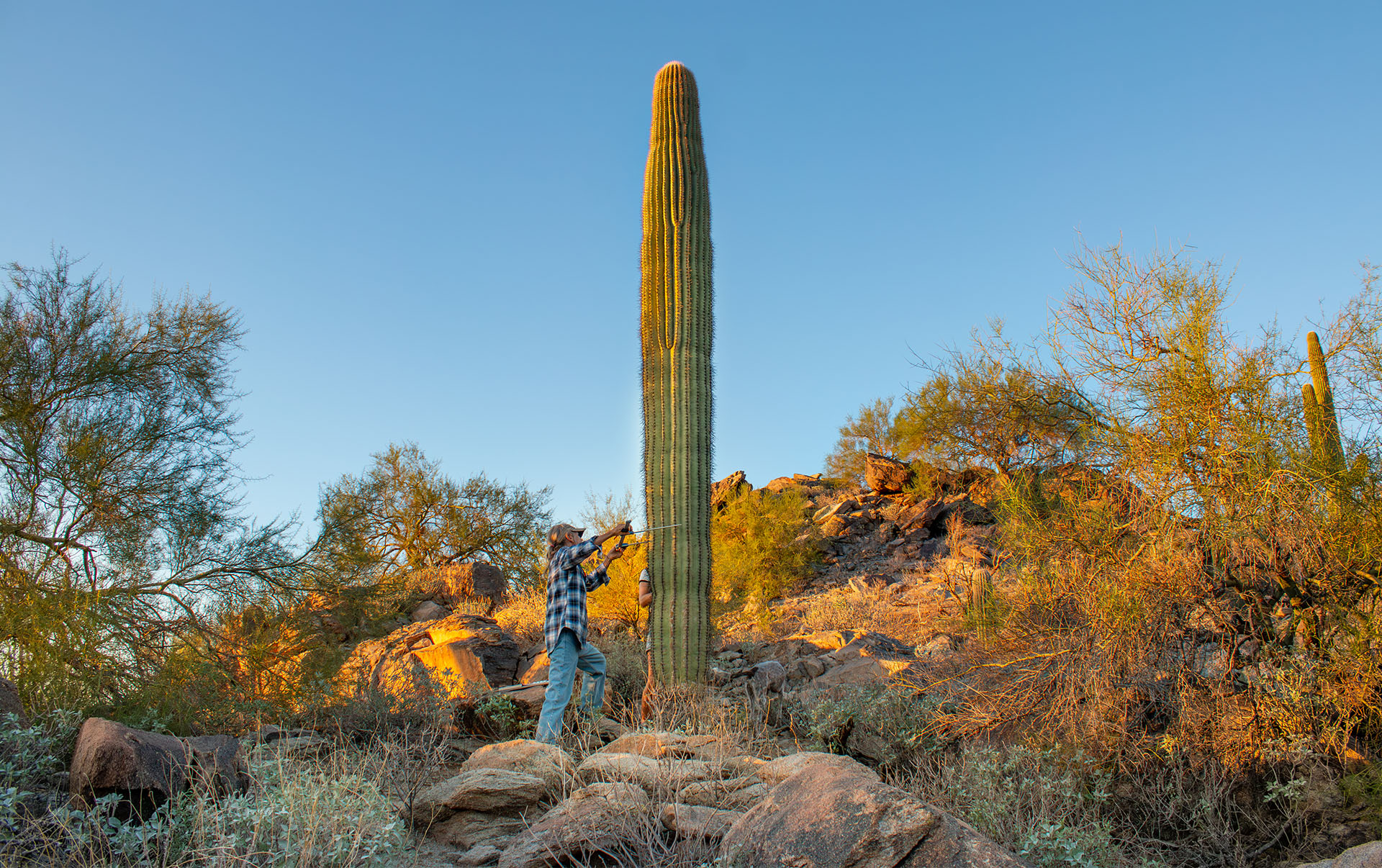
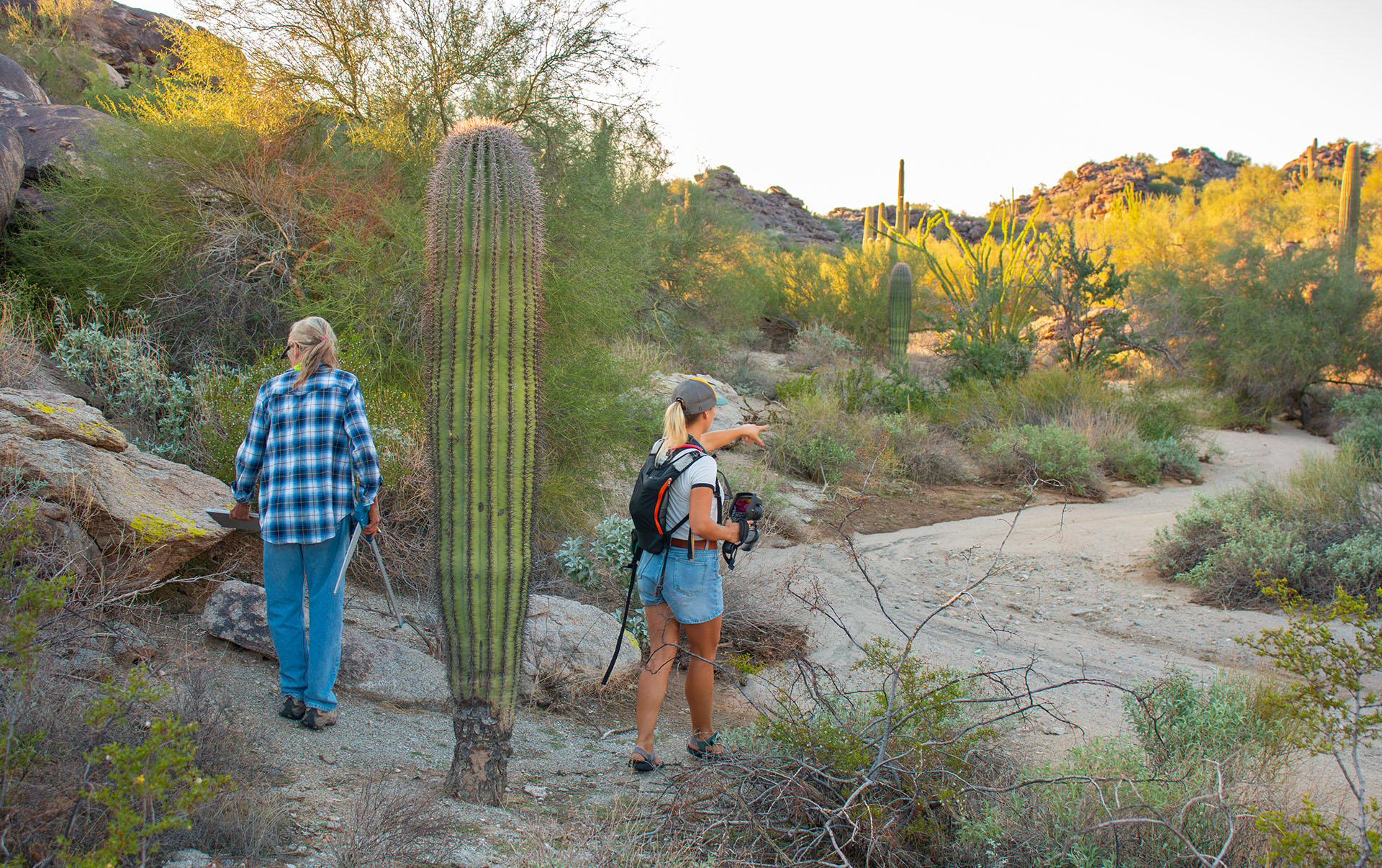
Over the past year, Garden researchers have been tracking how saguaros respond to both typical rainfall and more extreme weather events by monitoring saguaros on South Mountain. They also track their photosynthetic activity and, more recently, have added thermal imaging to capture temperature data. Their findings offer encouraging signs of saguaro resilience. Monsoon rains and cooler temperatures are driving rapid recovery in both water uptake and photosynthesis, highlighting how dynamic these iconic cacti can be. While researchers are still working to understand the limits of that resilience, one question remains: How many cycles of extreme water loss and recovery can a saguaro withstand as the Southwest continues to warm?
This research helps the scientists better understand the relationship between water availability, plant temperature and overall plant health. The findings will help identify where and when newly planted saguaros are most likely to survive, ensuring conservation efforts have the greatest impact.
Can Desert Plants Adapt to Extreme Heat?
Climate change is making heat waves longer, hotter and more frequent across the Southwest. Garden researchers are studying how desert plants respond when temperatures climb to dangerous levels. Can they adjust? How quickly do they acclimate? And are there limits to what even desert-adapted plants can endure?
This summer, our researchers are studying how plants respond to heat stress and their ability to acclimate to changing conditions. “Understanding plant responses to rising temperatures is essential for predicting how desert and dryland communities will change over time.” This research will help determine which plant populations are most likely to adapt or face increased risk from extreme heat.
Researchers are also studying whether widespread and abrupt leaf discoloration is the result of leaf scorching caused by extreme heat rather than leaf senescence. “By exposing two plant species with distinct responses to temperatures above 50°C, we aim to better understand the physiological processes that lead to premature leaf senescence versus leaf scorching and identify the conditions that trigger each response.”
Distinguishing this will improve our understanding of how plants respond to climate-driven stress, informing forest management and conservation decisions.
The work happening in the Garden’s research program is helping ensure that future generations can continue to experience towering saguaros, thriving desert habitats and the extraordinary biodiversity that makes the Sonoran Desert unlike anywhere else on Earth.
Check out the Garden’s Saguaro initiatives here to learn more about a pilot set of community science projects aimed at documenting, protecting and preserving the saguaro.