This month, Garden Senior Research Scientist Dr. Joe McAuliffe will begin a 15-day, 1,300-mile journey through one of the most botanically remarkable landscapes on Earth.
Arriving in Windhoek, Namibia, McAuliffe will first securing supplies, outfitting a vehicle and assembling the equipment needed for an extended field expedition. From there, he will travel south toward Cape Town, South Africa, traversing the full north-south length of the Succulent Karoo.
For McAuliffe, this is more than a road trip. It is the next chapter in more than a decade of research focused on understanding one of the world’s most extraordinary arid ecosystems.
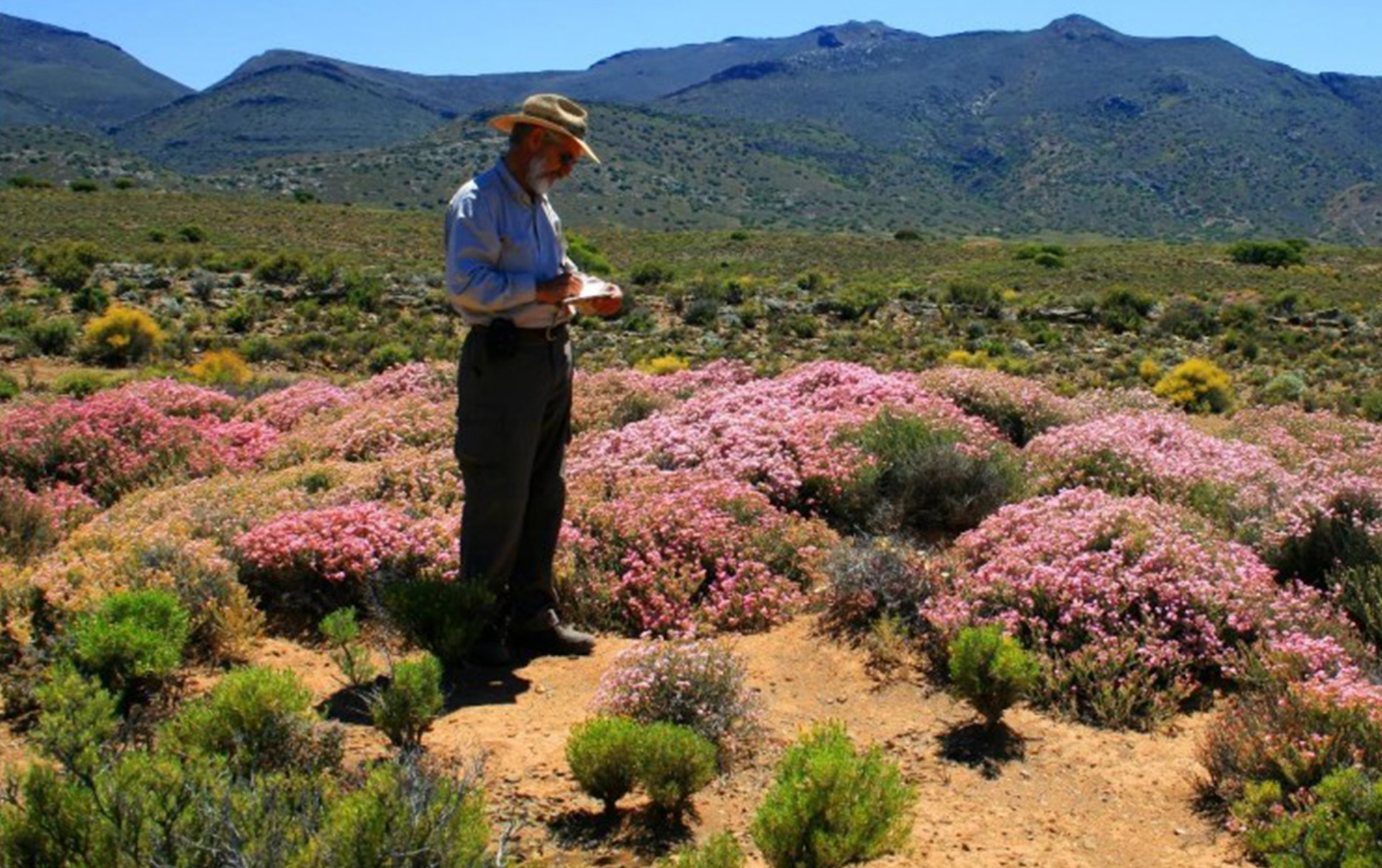
Stretching across parts of Namibia and South Africa, the Succulent Karoo is recognized as the most botanically diverse arid region in the world. Despite being much smaller in area than the Sonoran Desert, the Succulent Karoo contains more plant species than the entire Sonoran Desert region. Its remarkable diversity provides scientists with an opportunity to study how plants evolve, adapt and thrive in challenging environmental conditions.
The upcoming expedition builds on previous work McAuliffe conducted throughout the Succulent Karoo region of South Africa and Namibia from 2012 to 2023.
Returning to the region allows researchers to build on observations made over time and deepen their understanding of its landscapes and plant communities. This expedition will expand that work by traveling the full length of the Succulent Karoo, from Namibia south toward Cape Town.
Each week the Garden will update this blog with photos from McAuliffe’s research trip, as well as notes about his findings.
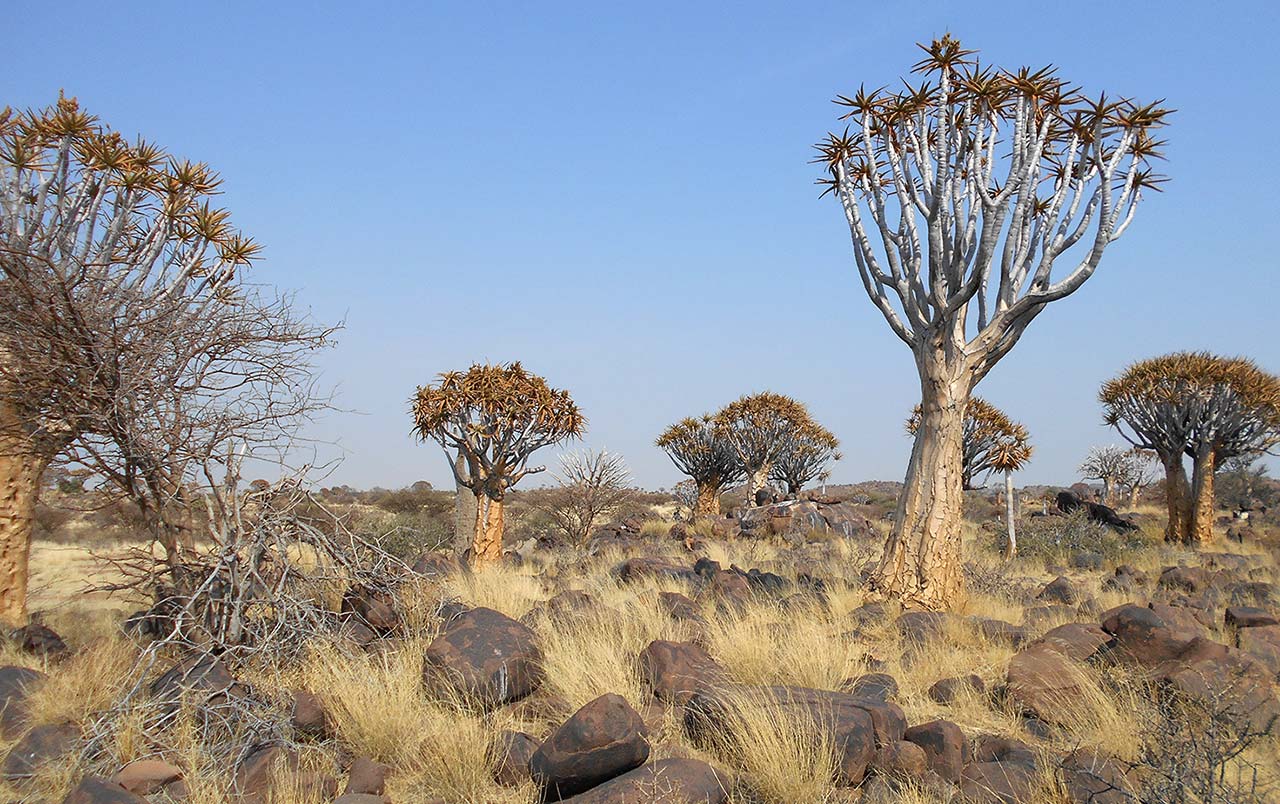
Photo taken by Joe McAuliffe
Update:
August 17-19
Before enjoying the scenery, I had to reacquaint myself with driving on the left side of the road, sitting on the right side of the vehicle. There was another small adjustment as well. The turn-signal and windshield-wiper controls are on opposite sides of the steering column from those I am accustomed to in the United States. More than once, approaching a turn and intending to signal, I instead announced my intentions by turning on the windshield wipers!

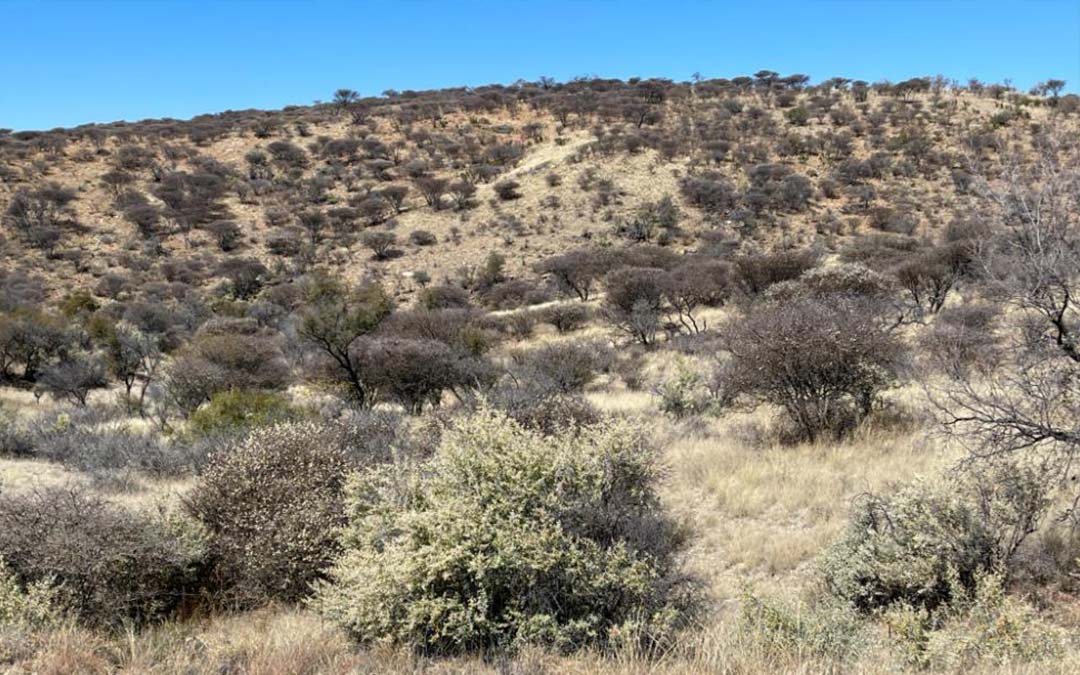
The drive took us through the dry savanna vegetation I remembered from my previous visit to Windhoek. The hillsides support an open cover of small trees and shrubs with an understory of perennial grasses. In some places, the landscape looks surprisingly familiar—reminiscent of the semidesert grasslands of southeastern Arizona, where mesquites and other drought-tolerant shrubs and small trees are similarly scattered through a cover of perennial grasses.
There is even a familiar grass growing along the way. Heteropogon contortus, known commonly as tanglehead in North America, has an extraordinarily broad natural distribution that includes both southern Africa and parts of North America. It is a characteristic grass of these Namibian savannas, but it is also familiar to visitors to the Desert Botanical Garden in Phoenix: we grow the same species in the “Desert Grassland” portion of our Plants and People of the Sonoran Desert Trail.