
As heat in the Sonoran Desert climbs, staying cool is an important part of life for the people, plants and animals that call it home. At the Garden, we explore how desert life adapts to heat and how science can help us better understand our environment. In this activity, you’ll become a scientist by measuring temperatures and investigating how sunlight, shade and color affect heat. You’ll use your observations to learn how the choices we make, like where we find shade or what colors we use, can help us stay cool in the desert.
Questions:
- Does water warm up differently in a dark-colored bowl and a light-colored bowl?
- Does water warm up more in the sun, or in the shade?
What You’ll Need:
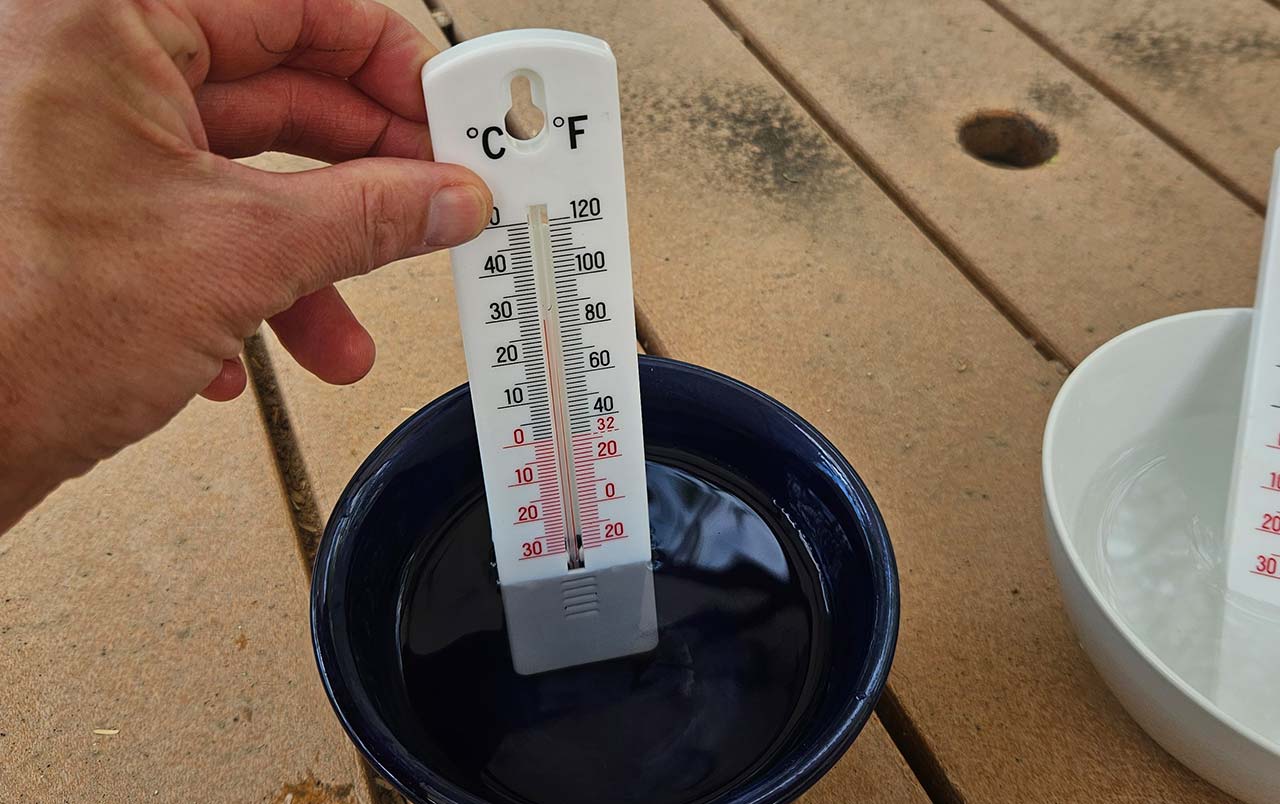
- One dark-colored bowl
- One light-colored bowl
- Equal amounts of cold water
- Thermometer
- Pencil
- Recording sheet
Part 1: Predict
Before you begin, make your best guess (or prediction) about what is going to happen!
Prediction 1 – I think the dark bowl will become ______. I think the bowls placed in the shade will become______:
- Warmer
- Cooler
- The same temperature
Why do you think that?
Part 2: Measure in the Sun
- Fill both bowls with the same amount of cold water.
- Before you put the bowls in the sun, measure and record the starting temperature.
- Place both bowls in direct sunlight for 1–2 hours.
- Measure the temperature again.
Part 3: Measure in the Shade
Repeat the investigation using fresh cold water.
Place both bowls in the shade for 1–2 hours.
Think Like a Scientist
- What happened?
- Which bowl warmed the most in the sun? Which bowl stayed cooler?
- Was there a big difference between the bowls in the shade?
- Why do you think that happened?
What’s the Big Idea?
Dark colors soak up more of the sun’s energy, almost like they’re collecting it. That energy turns into heat, so dark objects get warmer. Light colors bounce more of the sun’s energy away, so they don’t heat up as much. Shade reduces the amount of sunlight reaching an object, helping keep it cooler.
Understanding how sunlight and color affect temperature helps us make smart choices about clothing, outdoor activities, buildings and staying safe during hot weather especially in the Sonoran Desert.
What Does This Mean for Us?
Scientists use observations to help people make good decisions every day.
Think about your own life:
What color shirt would you rather wear on a hot summer day? Why might a black car feel hotter than a white car after sitting in the sun? Why might some desert plants have light-colored or silvery leaves?
Challenge:
Imagine you are designing a playground in Phoenix in the summer. Draw or list three things you would include to help keep people cool.
