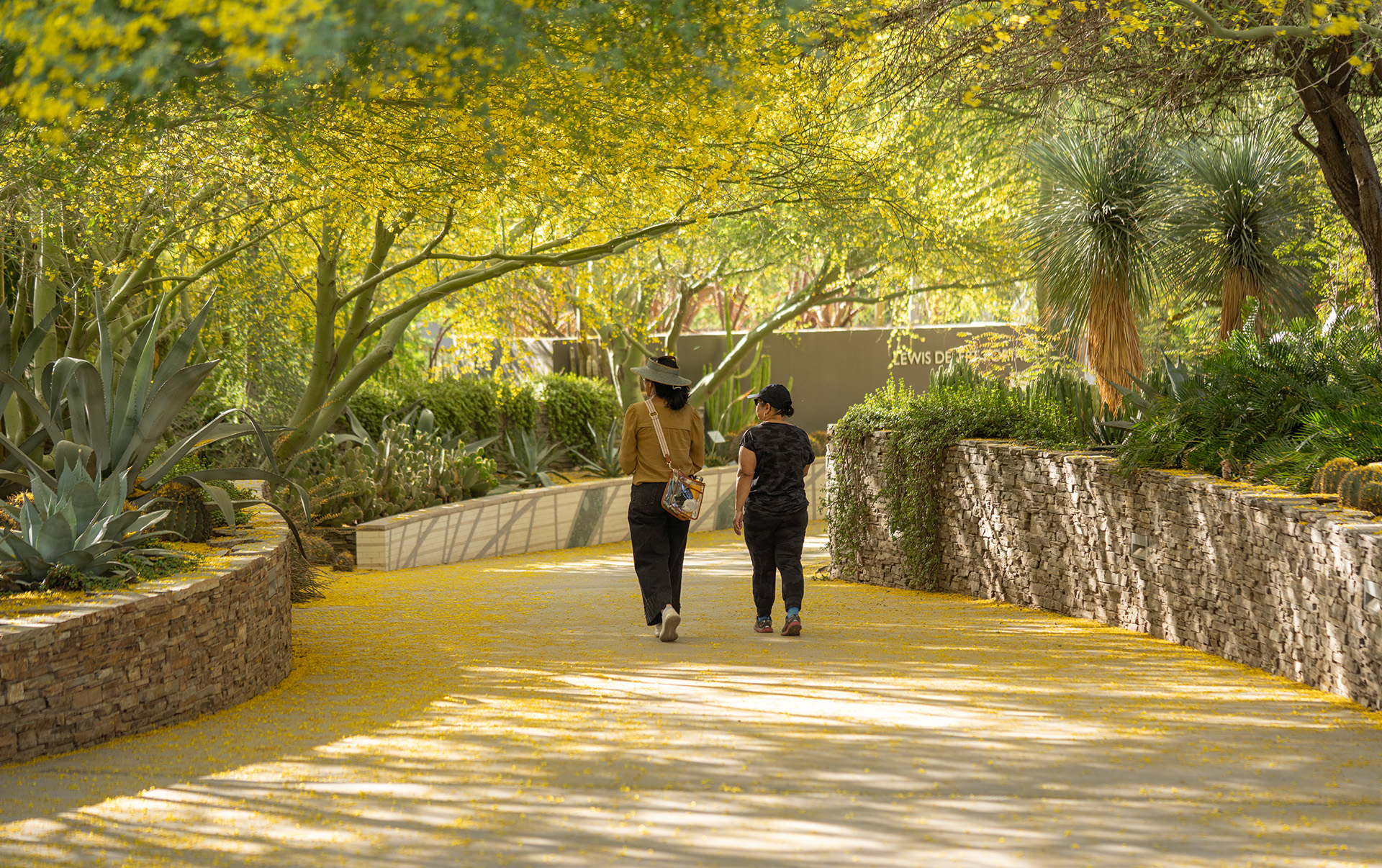
In the heart of the Sonoran Desert, few trees capture the spirit of resilience quite like the palo verde tree. With vibrant green trunks and golden spring blooms, these remarkable trees are essential to the desert’s ecosystem.
There are around a dozen species of palo verde found across arid regions worldwide, but two native standouts define the Sonoran Desert: the blue palo verde and the little-leaf palo verde. Both are widely used in desert landscaping for their drought tolerance and striking seasonal color.
A Perfectly Timed Bloom
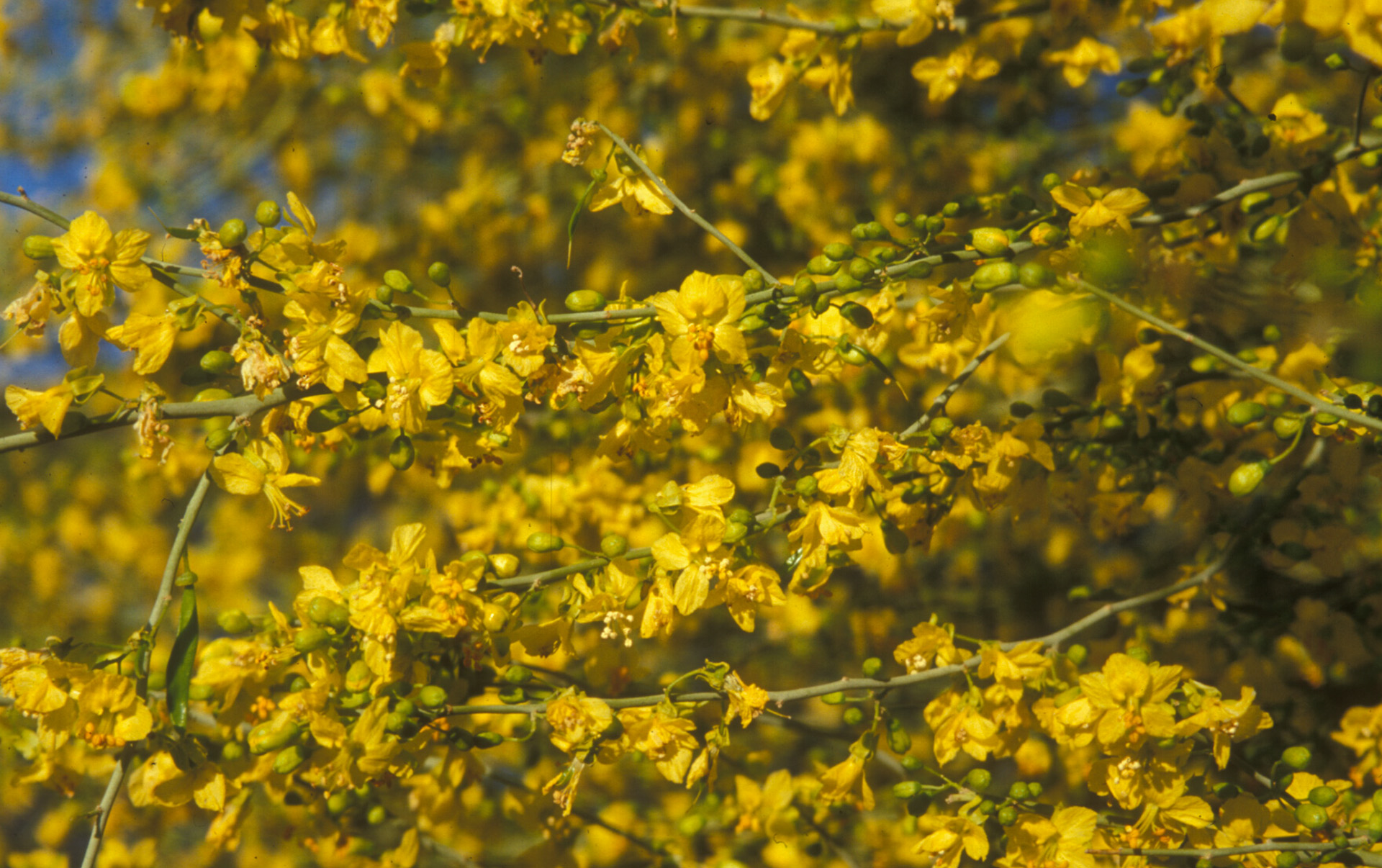
Each spring, palo verde trees burst into a canopy of bright yellow flowers. These blooms aren’t just for show, they play an important ecological role. Native bees and honeybees are the primary pollinators, relying on the trees as a seasonal food source.
Interestingly, the two species stagger their flowering periods. Blue palo verdes typically bloom a few weeks earlier than little-leaf palo verdes, a natural strategy that helps prevent hybridization.
The Tree That Photosynthesizes Through Its Bark
One of the palo verde’s most fascinating adaptations lies in its signature green bark. Unlike most trees, palo verdes rely heavily on their stems for photosynthesis, accounting for roughly 74% of the process, while their leaves contribute far less.
The tree’s bark is essential. Protecting it from damage and avoiding excessive pruning is key to maintaining the tree’s overall health and vitality.
Tiny Holes, Big Story
Take a closer look at a palo verde seed pod, and you might notice tiny holes scattered across its surface. These are signs of bruchid beetles at work.
Female beetles lay their eggs on the pods, and once the larvae hatch, they burrow inside to feed on the seeds. After maturing, the adult beetles emerge, leaving behind the small exit holes, a subtle but fascinating glimpse into the desert’s intricate food web.
A Lifeline for the Desert
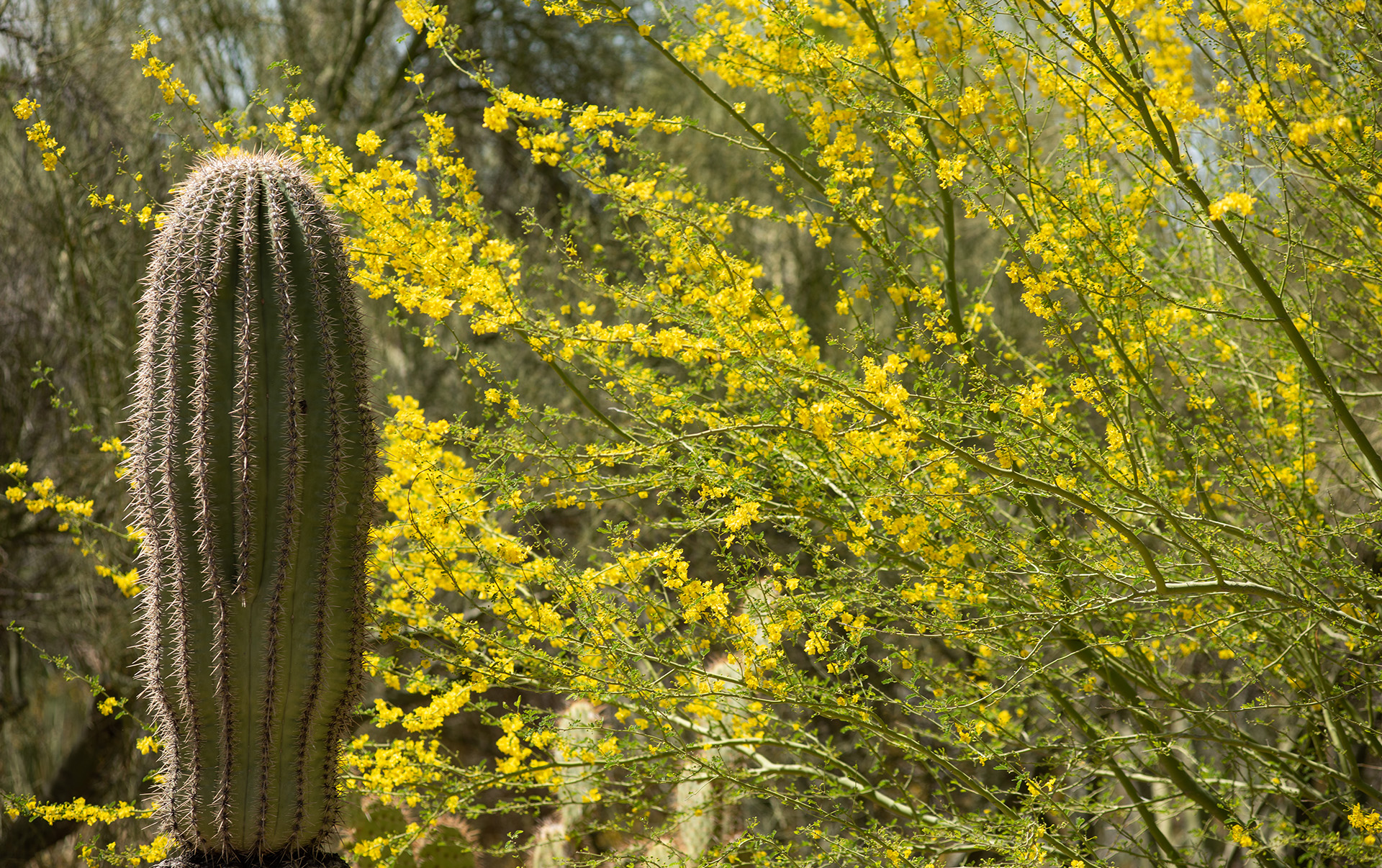
Named Arizona’s official state tree in 1954, the palo verde plays a vital role beyond its beauty. Alongside desert companions like ironwood trees, it acts as a nurse plant for young saguaros, providing shade, shelter and protection from harsh sunlight and hungry animals during their most vulnerable stages.
Built to Last
Palo verde trees are built for endurance. Many can live well beyond 100 years, with some potentially reaching up to 400 years. Their growth habit, often forming multiple trunks and branching low to the ground, helps protect their thin, photosynthetic bark from the desert’s intense summer sun.
Though often referred to as trees, their structure resembles that of large shrubs, a form perfectly adapted to survive in extreme conditions.
A Garden Favorite
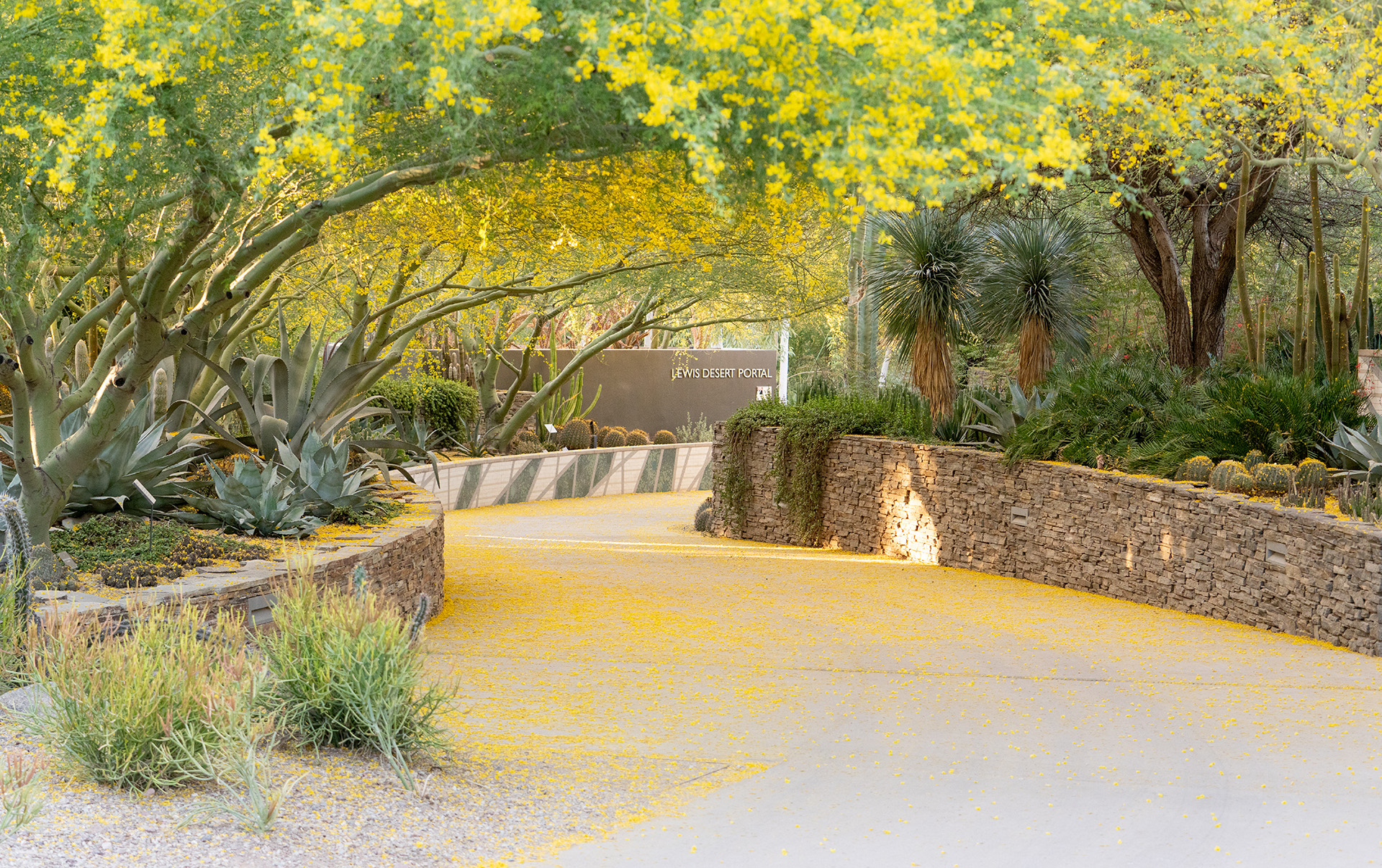
Here at the Garden, more than 550 palo verde trees thrive across the landscape, showcasing their beauty and ecological importance. From their vivid spring blooms to their sculptural green trunks, they are a defining feature of the desert experience.
Resilient by Nature
Once established, palo verdes require minimal water and are exceptionally tolerant of heat and drought. Their ability to not only survive but thrive in harsh desert conditions makes them an indispensable part of sustainable landscaping and a true symbol of desert resilience.
In the heart of the Sonoran Desert, few trees capture the spirit of resilience quite like the palo verde tree.