
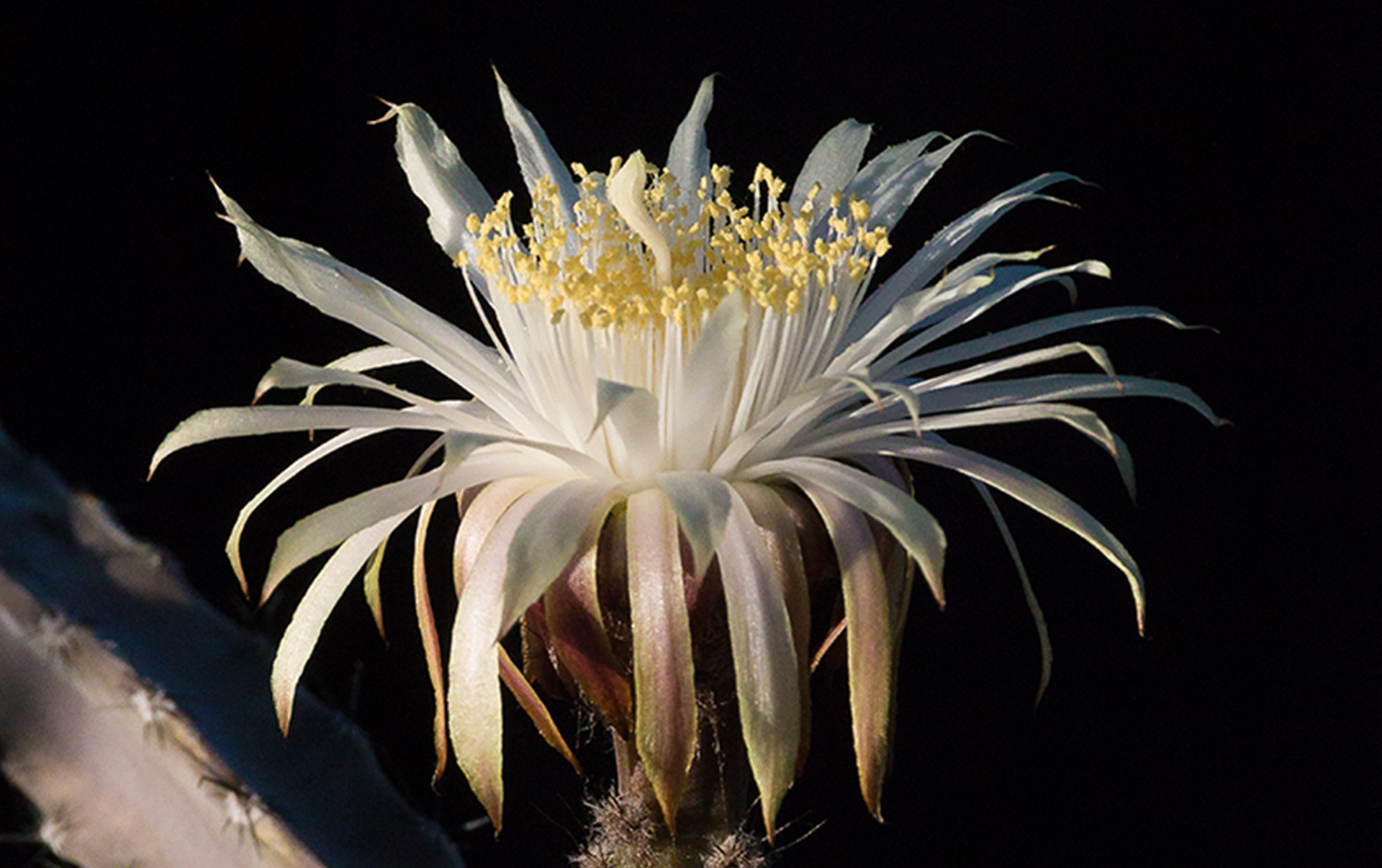
This spring, the Garden’s trails will be blanketed with a variety of flowers, including those of night-blooming cactus.
Most of these cactus species bloom at night because they rely on nocturnal pollinators, including bats. This strategy helps protect their delicate, showy flowers from the intensity of daytime heat. Night bloomers also avoid competing with plants that flower during the day.
Below are some cactus, yuccas and hesperaloes you can find blooming at night. The Garden now has extended hours, 6 a.m. to 10 p.m., so you won’t miss these dazzling plants. Typically, their flowers open in the late evening and close before noon the following day—perfect for early risers and night owls alike.
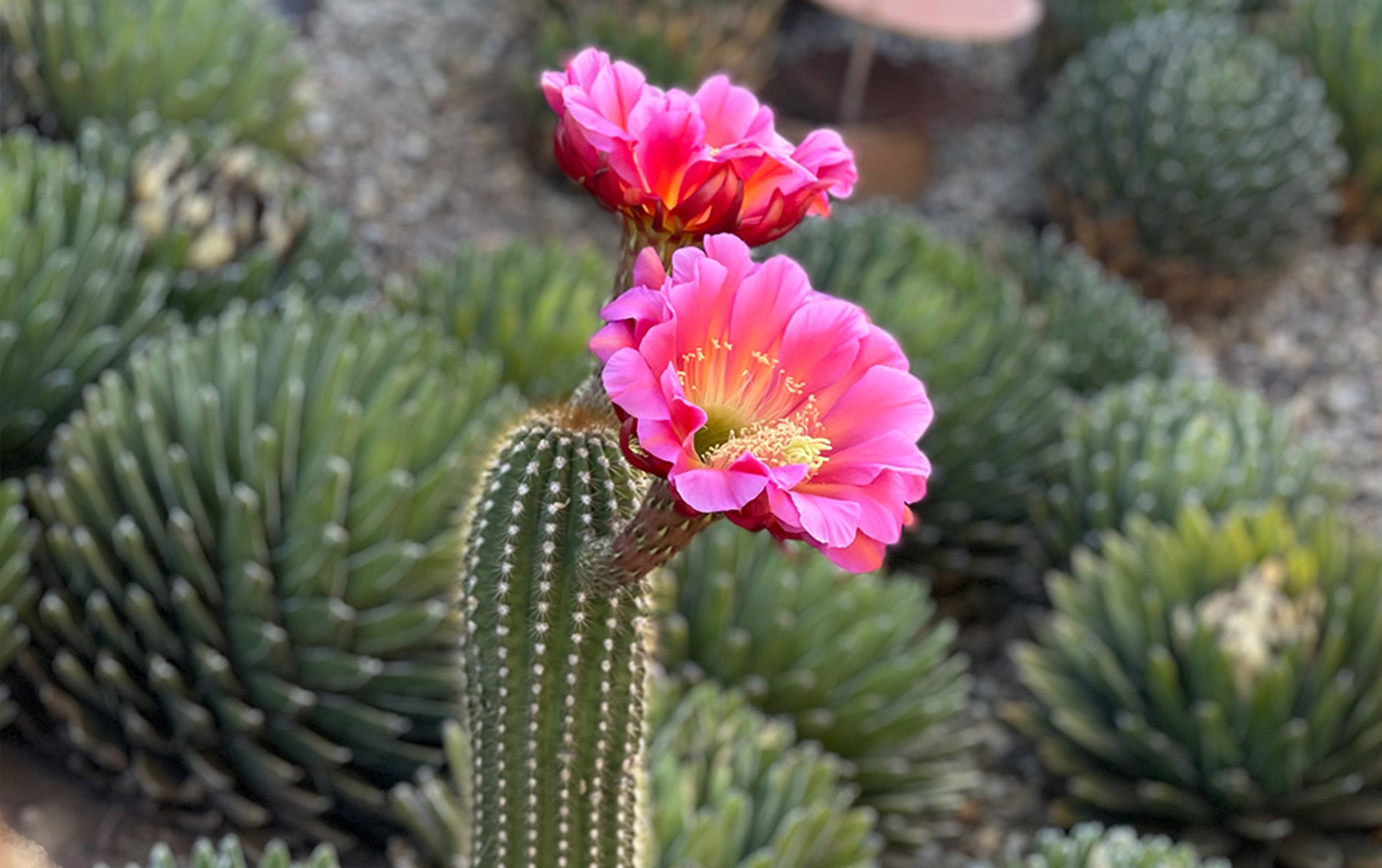
Flying Saucer Cactus
This is the star of spring at the Garden. A popular cactus hybrid created by Hans Britsch at his California nursery, Western Cactus Growers, its flowers are a vibrant pink with touches of orange and yellow highlighting each petal. It photographs beautifully, and this year, guests can spot it inside the Cactus Gallery and along the main trail.
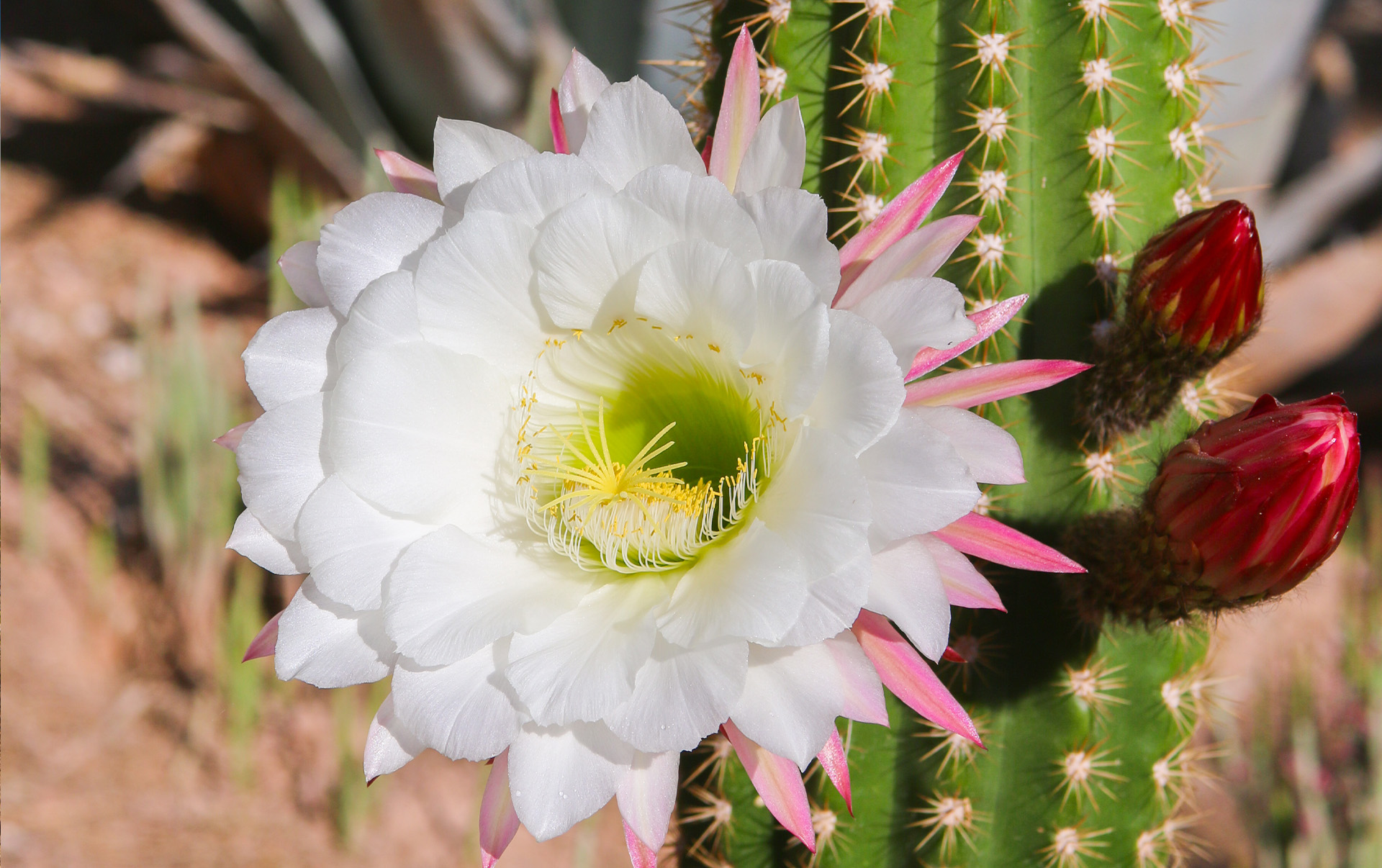
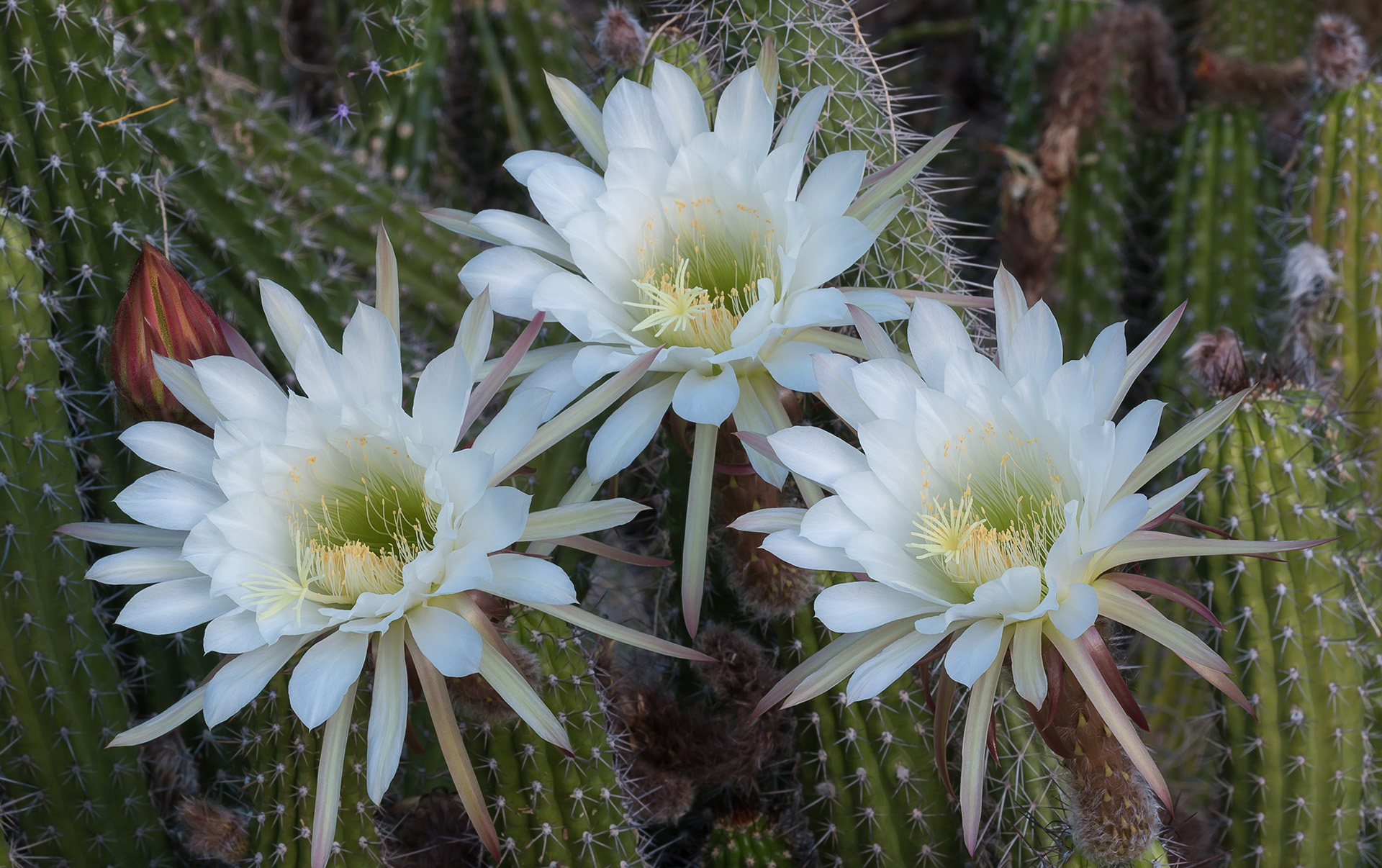
Argentine Giant
A favorite at the Garden and in low-maintenance landscapes, this cactus is known for its showy white flowers, which can measure more than 8 inches in diameter. Found throughout the Garden, guests can spot it along nearly every trail, including the lively Christensen Family Desert Oasis. One of its most impressive features is its mass blooming—many will continue flowering into the summer.
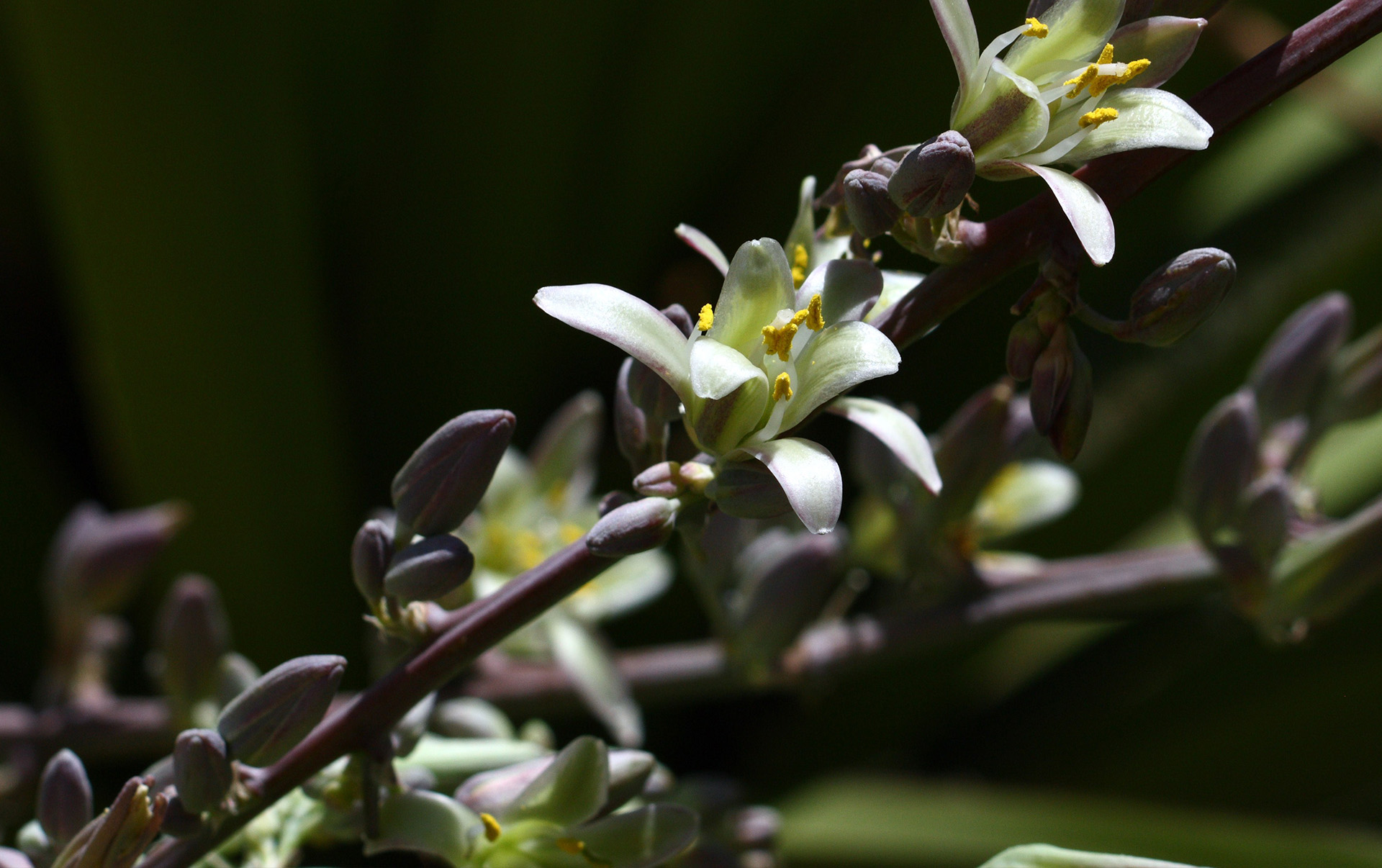
Giant Hesperaloe
Is it an agave? Is it an aloe? It’s neither. The giant hesperaloe is a succulent native to Mexico. With long, arching, sword-like leaves that reach skyward, this plant produces clusters of creamy white to pale green blooms that attract a variety of pollinators. The flowers are smaller, so guests may need a closer look to fully appreciate their beauty.
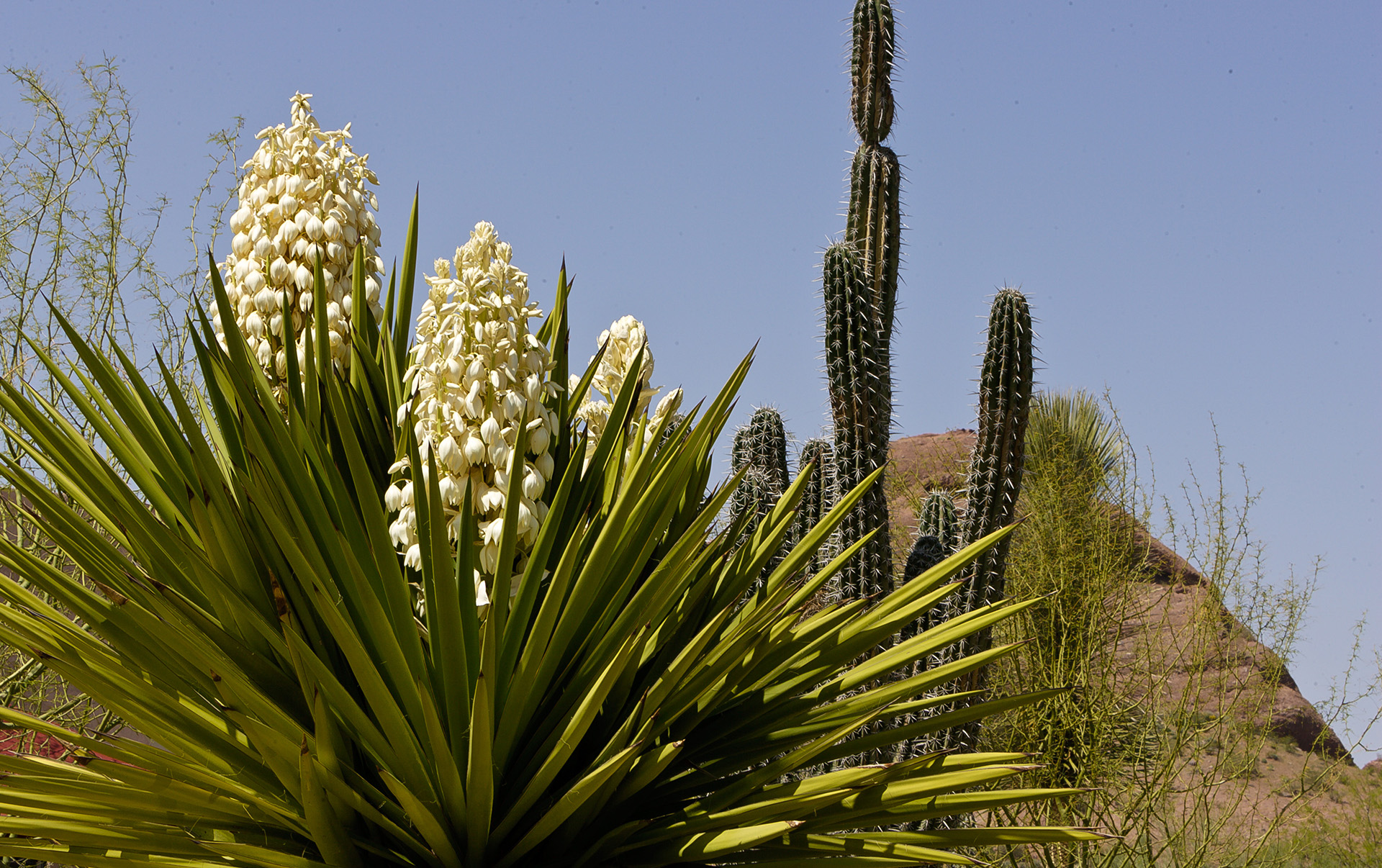
Yuccas
With fragrant, creamy-white flowers, yuccas invite nighttime pollinators to feast on their nectar. The Garden features a dedicated space for these plants called the Berlin Yucca Forest, where guests can find a variety in bloom. While many yucca species grow tall, some remain shorter, allowing visitors to more easily admire their bell-shaped inflorescence that attract moths.
Echinopsis Species
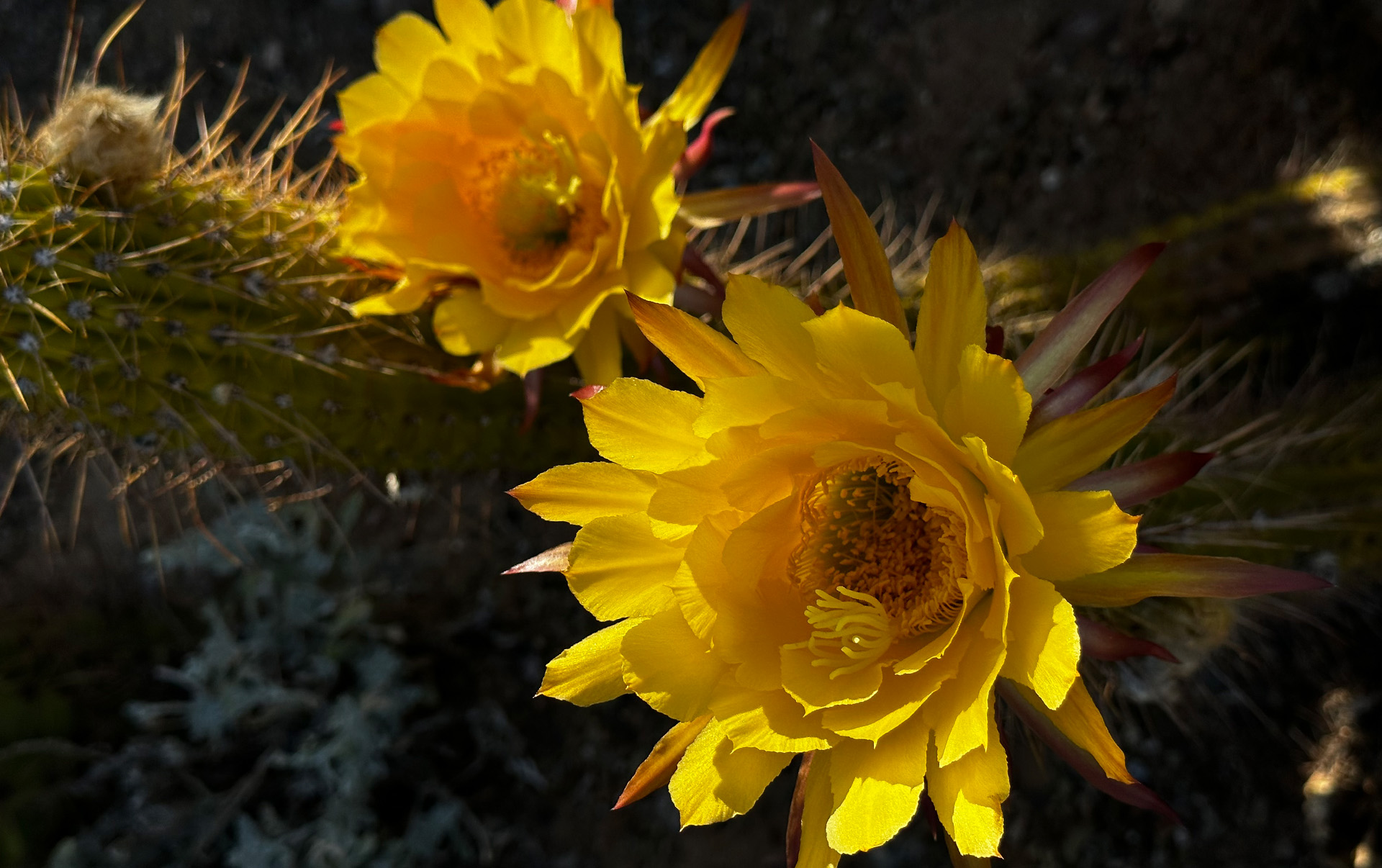
Like the Argentine giant and the Flying Saucer cactus, echinopsis are a genus of cactus known for their showy, nocturnal flowers. These cactus are scattered throughout the Garden, and guests can find them along the main trail and inside the Cactus Gallery.
