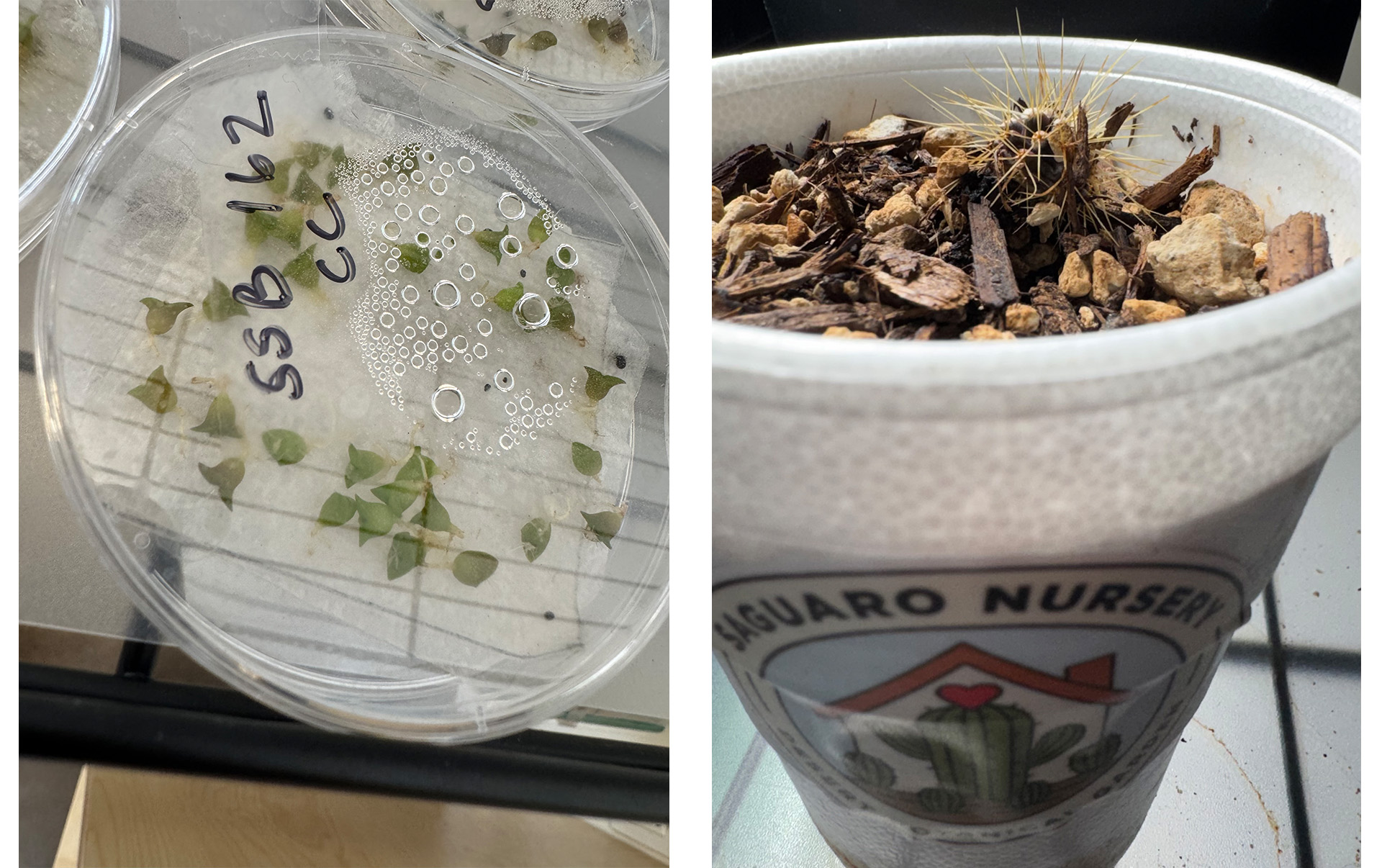
At the Garden, caring for saguaros means understanding them at every stage of life from seed to desert icon. Several researchers at the Garden work on monitoring these plants, studying their growth at different life stages and helping visitors appreciate how these desert icons survive in one of the harshest environments on Earth.
Earlier this year, the Education team used Flashlight Nights to help visitors understand the Garden’s long‑term work with saguaros. One of the most popular stations introduced guests to saguaro “babies,” giving them a rare look at the earliest stages of growth that the Garden team studies year‑round.
Many guests were amazed to learn that saguaros start as tiny seeds. The sight of these miniature plants, so small at this stage, yet with the potential to become a giant, some living to 200 years old and in some cases carrying 900 gallons of water. Their seedling stage on display brought out countless “ooohs” and “aaahhhs”, an incredible demonstration on growth and how dynamic these plants are. The Saguaro teaches us that the right environmental conditions, patience and persistence shape these plants, the desert, .
One of the key takeaways from the exhibit was how saguaros store water, support wildlife and play an important role in Tohono O’odham traditions. We displayed living examples from freshly germinated seedlings just two months old to a two‑year‑old plant already navigating the challenges of desert life.
The two‑month‑old seedlings were bright green , while the two‑year‑old saguaro stood only about half an inch tall, but their spines are developed and they bite. Their tiny size consistently sparks curiosity and helps explain why monitoring young saguaros is such an important and long‑term commitment.
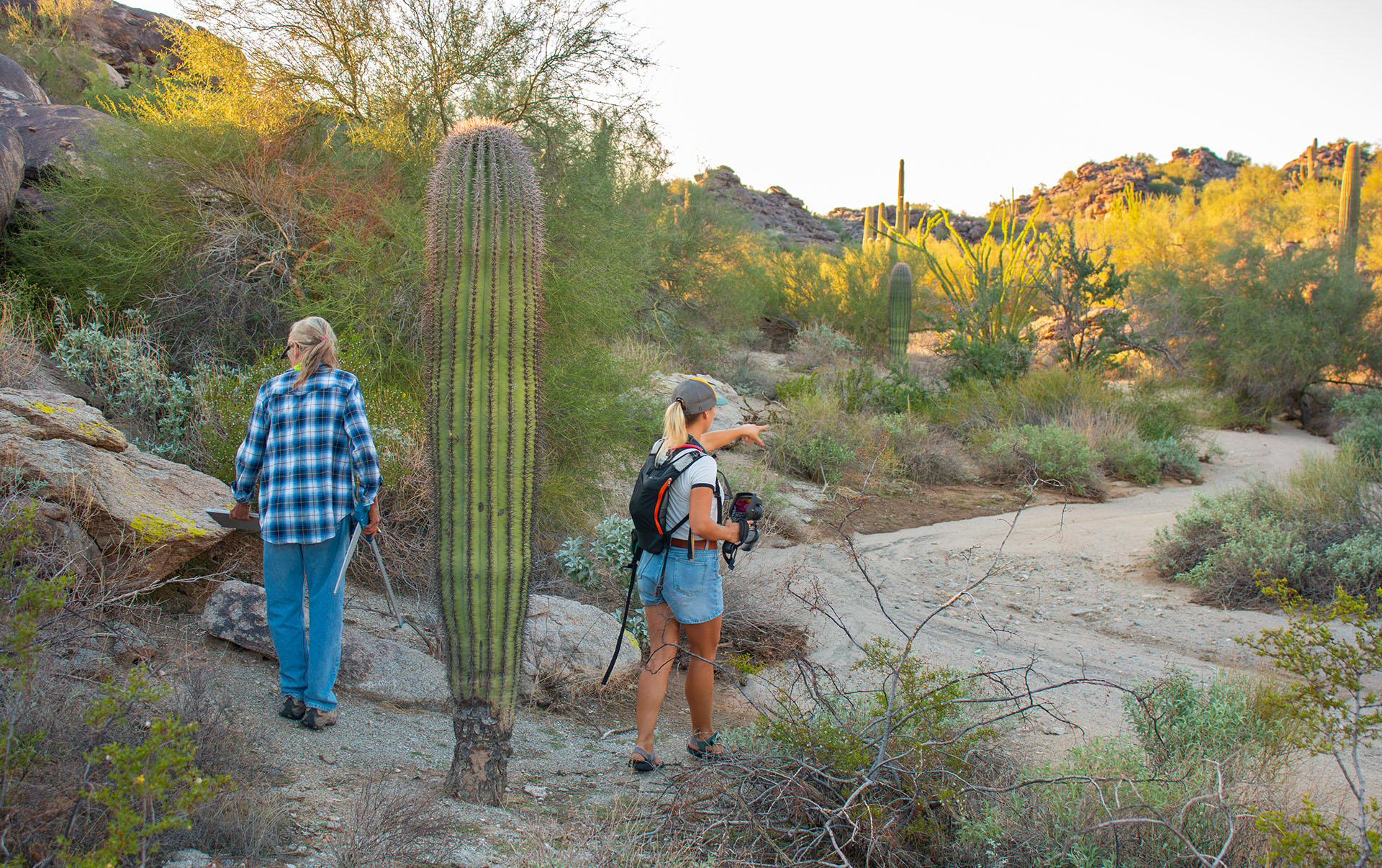
One young saguaro the Garden monitors on South Mountain tells an especially compelling story. Unlike most saguaros, which rely on “nurse plants” such as palo verde or creosote bushes for shade, nutrients and protection, this one grows entirely on its own.
When we photographed it in January 2025, it appeared slender, with tightly spaced ribs and spines an indication the plant is not storing much water. With the incredible rain from the late fall and into the winter by December 2025, this same plant had dramatically expanded, bursting with stored water. This transformation showcases one of the saguaro’s most impressive adaptations: accordion‑like ribs that swell after rainfall. Saguaros absorb water through an osmotic gradient, meaning a higher salt and sugar concentration draws water into the stem, allowing them to keep taking in moisture in conditions most plants cannot. However, they do not have an off switch and continue taking up water even when fully expanded. This can create small fissures that appear during this process, which are harmless and heal naturally. As the plant matures, it will develop additional ribs, increasing its ability to store water.
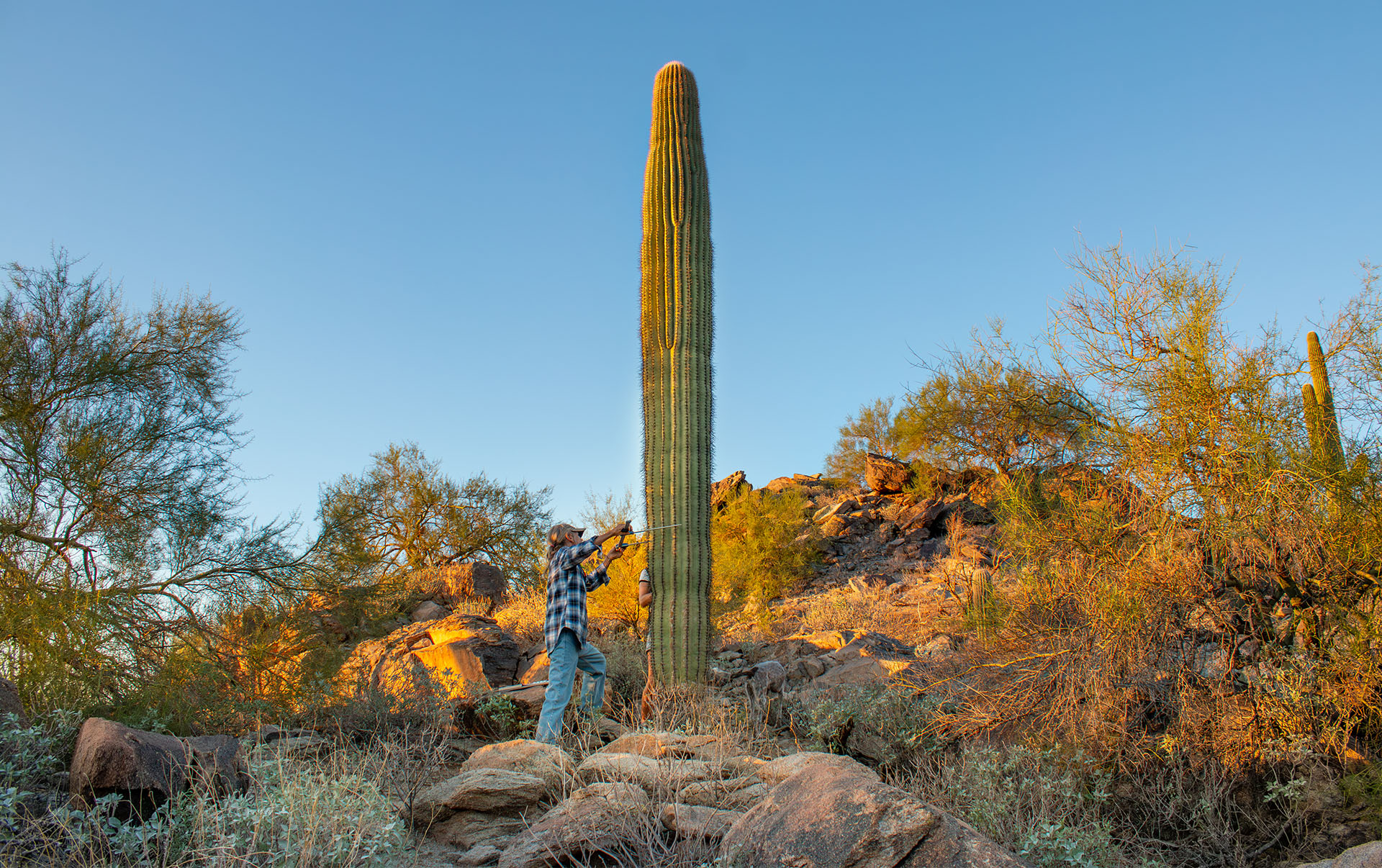
Based on its size and the conditions at its site, Garden researchers estimated this saguaro is about 10–15 years old a reminder of how slow and steady saguaro growth truly is. Its response to weather patterns also mirrors what we see across South Mountain: after a dry August in 2025, young saguaros rapidly absorbed water from fall and early‑winter rains, filling to near capacity. More ribs mean more storage potential, but also more surface area for water loss.
From a seed 2 mm long to a towering giant that may live 50 to 200 years, every saguaro begins humbly. Seeing seedlings up close helps visitors understand just how much time, luck and resilience go into creating the desert silhouettes we know so well.