
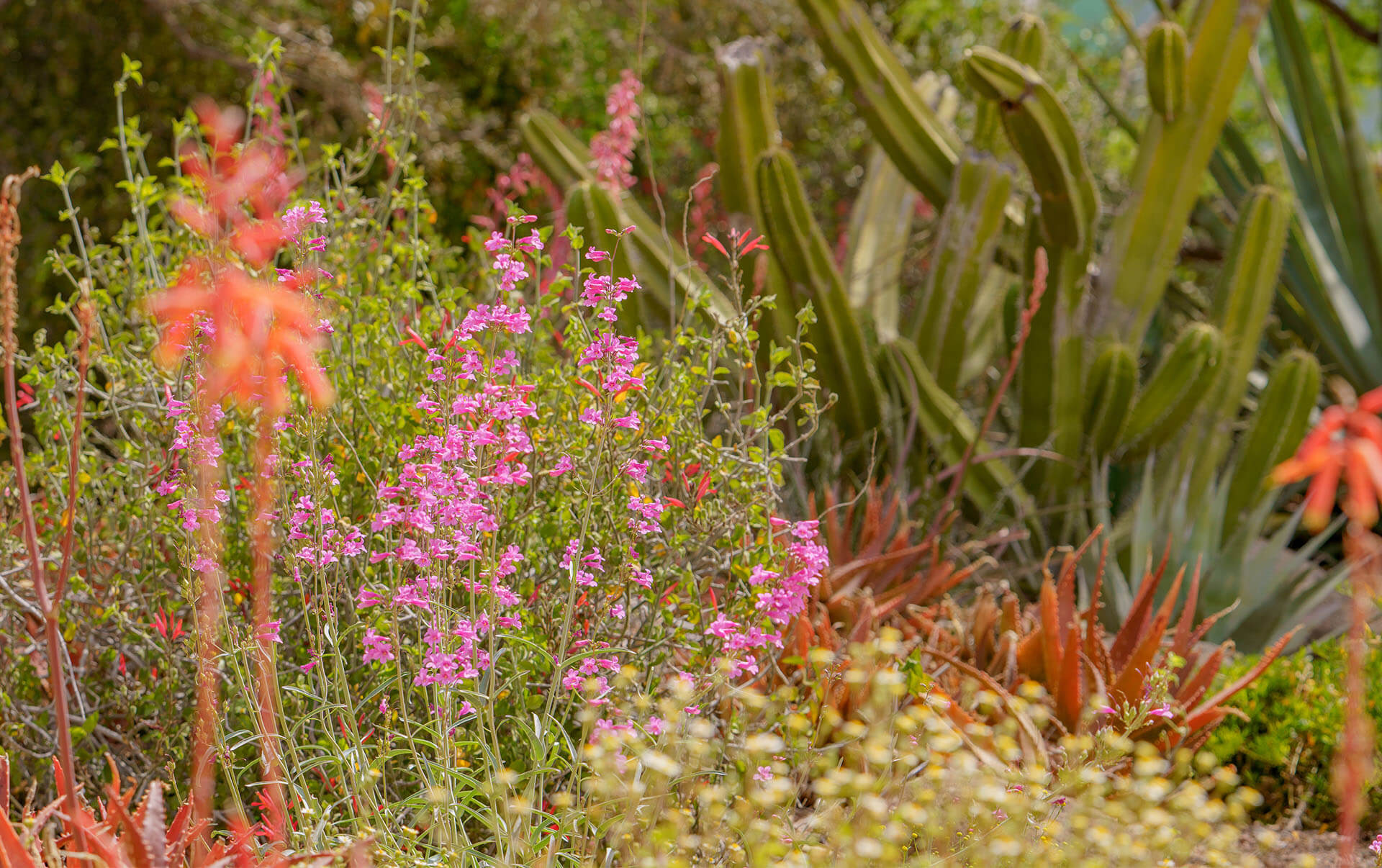
Flowers do more than brighten a landscape. They have shaped the evolution of animals, sustained ecosystems and transformed the way we experience the living world. In his latest book, “How Flowers Made Our World”, bestselling author and biologist David George Haskell explores the extraordinary influence of flowering plants and their enduring connections to life on Earth.
In celebration of the Garden’s new Super Bloom exhibit, we sat down with Haskell to discuss the creative power of flowers, their role in shaping our planet and what they can teach us about our place in the natural world.
Q: What are some of the plants that inspired you write this book and how did they inspire you?
A: Each chapter of the book focuses on a particular species of flower as a starting point to celebrate and explore the creative powers of flowering plants. There are 350,000 species of flowering plants in the world so there’s a lot of choice! I chose flowers that both had significant meaning in my own life and even more importantly, illustrated fascinating aspects of plants’ diversity. Magnolia trees echo some of the earliest stages of flower evolution on the planet and they are also delightful and exuberant parts of the flora where I live in Atlanta. Seagrasses, on the other hand, have tiny flowers that bloom under water and so they are seldom celebrated. Yet, they provide some of the most important habitat in the sea and are incredible stores of carbon. I explored these in Scotland in the company of my sister, who lives close to the coast there. Flowers also have very significant roles in human culture. I follow these by visiting flowers Chelsea Flower Show in London, in the perfume-growing rose gardens in Grasse, southern France and in the bombproof vaults of the Linnean Society in London. At each place, I explored the many ways that human culture is unexpectedly entangled with the biology of flowering plants.
Q: What might surprise people most about the power of flowers? Why are they so revolutionary?
A: In our culture we often think of flowers as beautiful but not particularly powerful. They’re pretty but not in charge. Yet if we look at the history of life on Earth, when flowering plants evolved, the planet was utterly transformed. They built important habitats such as rainforests, temperate forests, desert vegetation, mangroves and prairies. They catalyzed the evolution of animals such as bees, butterflies and grazing mammals. Our own species evolved in the grasslands of Africa and grasses are a specialized kind of flowering plant. We can think of flowers as the Earth’s great disruptors and builders. I think three superpowers undergird their creative powers. They built new relationships with animals, especially pollinators, using the language of beauty. They also expanded botanical motherhood by provisioning seeds with extra food and by enclosing seeds inside fruits. Last, they also have incredible inner genetic flexibility that allows them to innovate at spectacular rates. These three superpowers combine to make them some of the Earth’s great revolutionaries.
Q: What do you hope people will see differently the next time they encounter a flower?
A: I hope that people will be curious about the flower’s relationships with other beings. The shape, color and aroma of flowers all evolved to “speak to” different pollinators. And so, every flower offers a window into ecological relationships. Likewise, when flowers mature into fruit, they also demonstrate a range of ecological relationships. The nature of the fruit tells us about the nature of how the plant disperses seeds. More generally the diversity of floral form is a marvelous education in the wide range of strategies that plants use to thrive in different environments.
Q: What are your favorite cactus flowers?
A: I live in the east and so eastern prickly pear are the ones I look for at home. Their flowers are some of my all-time favorites to look for in the wild. The intensity of their yellow and orange immerses us in the most gorgeous hues. Two winters ago, I started some from seeds so that I could enjoy their beauty in my own yard. The plants are now as tall as my hand and I’m looking forward to their first bloom in a few years. In the West, I love the different species of barrel cactus. Their flowers always seem such a wonderful surprise upon the rotund, densely protected body of the cactus. One day I would love to see the bat-pollinated flowers of the saguaro cactus. The special relationship between these flying mammals and the flowers is such a great demonstration of evolution’s amazing flexibility. I’ll need to come back in their flowering season!